
Can AI Characters Help With Creative Writing?
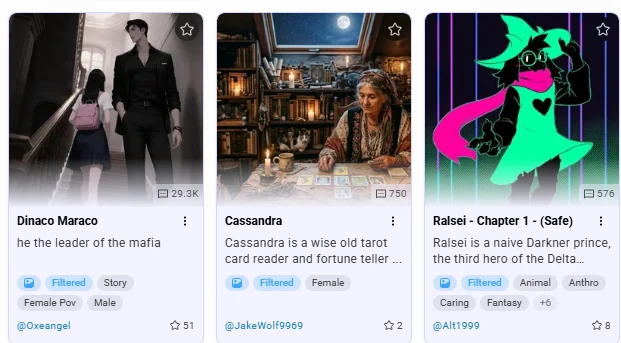
AI characters can improve creative writing by acting as interactive partners instead of text generators. Surveys published between 2024 and 2025 show that more than half of professional content creators use AI during brainstorming or editing, while many fiction writers rely on character-based conversations to build dialogue and personality. Writers can test scenes, interview fictional people, rewrite chapters from different viewpoints, and compare emotional reactions within minutes. The final manuscript still depends on human editing, but AI characters reduce drafting time, increase idea variety, and help maintain consistent personalities across long stories.
Many writers spend more time thinking than typing. A survey from Adobe in 2024 reported that over 60% of creators experienced creative blocks several times each month. Instead of asking an AI to "write a story," many writers now build individual AI characters with different ages, occupations, memories, and speaking styles. The conversation becomes similar to interviewing an actor before filming begins. Different personalities naturally produce different answers, making scenes feel less repetitive.
That shift also changes how dialogue is written. Instead of editing the same conversation repeatedly, writers can compare several versions within one session.
| Writing Method | Result |
|---|---|
| Standard AI prompt | Similar sentence patterns |
| AI character conversation | Different emotional responses |
| Multiple AI characters | More varied dialogue and conflict |
A novelist writing a mystery, for example, may ask the detective, the witness, and the suspect the same question. Their answers rarely match, creating additional details that can later be refined by the author.
A retired police officer may notice physical evidence first, while a frightened witness focuses on sounds, and a guilty suspect avoids direct answers. Those differences often create believable conversations without requiring every response to be manually rewritten.
Dialogue is only one part of the process. Character consistency becomes harder as novels grow longer. A manuscript of 90,000 words may contain hundreds of conversations. If a character suddenly changes vocabulary or personality halfway through the book, readers usually notice. AI characters can keep background information available throughout a project, reducing accidental personality changes during later chapters.
Several commercial writing platforms released long-memory features during 2024 and 2025, allowing characters to remember previous conversations across thousands of messages. Some systems can recall earlier story events instead of restarting every conversation from the beginning. This helps maintain relationships between fictional characters over longer timelines.
The same approach also supports worldbuilding. Fantasy and science fiction often include dozens of locations, social groups, and historical events. Rather than writing pages of background notes first, authors can let AI characters describe daily life from different perspectives.
-
A merchant explains local trade.
-
A soldier describes border security.
-
A doctor discusses common diseases.
-
A student talks about education.
-
A traveler compares different cities.
Those conversations often reveal missing details that would otherwise appear much later during editing.
Research published in recent years has also shown that people generate more ideas when brainstorming with interactive partners than when working entirely alone. AI characters extend that process because they respond immediately, allowing dozens of follow-up questions during a single writing session. A writer can test multiple endings within 30 minutes instead of drafting every version manually.
This does not guarantee better stories. It simply gives writers more material to review before selecting what fits their own style.
Creative writing also benefits from perspective changes. A romance scene can be rewritten from each character's viewpoint. A courtroom scene can be described by the attorney, the defendant, the judge, or someone watching from the public gallery. Those changes frequently expose missing emotional details without changing the overall plot.
Many independent authors also use AI characters when writing interactive fiction or visual novels. Instead of preparing one fixed conversation, developers generate alternative responses for different player choices. During internal testing, several studios reported creating hundreds of dialogue variations before selecting the final script, reducing repetitive editing later in production.
Some creators also experiment with adult conversations through ai sex chat platforms. These systems focus on role-play, personality consistency, and long-form conversations rather than simple question-and-answer exchanges. Although the subject differs from traditional fiction writing, many writers study these interactions to understand pacing, emotional continuity, and conversational rhythm before adapting similar techniques for novels or interactive storytelling.
Human editing still occupies the largest part of the workflow. AI sometimes repeats phrases, introduces factual mistakes, forgets timeline details, or produces dialogue that sounds similar across multiple characters. For that reason, experienced writers usually separate drafting from editing. The AI produces possibilities, while the author decides what remains in the manuscript.
According to publishing surveys released in 2025, readers continue to value original storytelling, believable characters, and emotional consistency more than the technology used during drafting. A well-written story still depends on revision, pacing, structure, and personal style. AI characters expand the number of conversations a writer can explore, but the finished work continues to reflect the choices made by the author rather than the software itself.
Have a story worth telling?
We work with a small roster of founders each quarter. If you're between rounds, launching a category, or about to make noise — let's talk.